In a recent fireside chat, Vanessa Collins of Edgewise Insurance Brokers and Fenton Green sat down with Gil Snir, Founder & CEO of Audit Cover, to explore what real-world claims data is revealing about the ATO compliance environment.
With thousands of insured clients and live claims flowing in daily, Gil’s view is grounded in what’s actually happening, not just policy updates. And the key message for firms heading into 2026 is clear: audit risk hasn’t disappeared, it’s evolved.
One of the most important reframes from the session was this:
Clients aren’t getting riskier. The system is getting more connected and visible.
Over the past 12–24 months, reviews have increasingly been triggered by automated data matching rather than tip-offs or obvious red flags. When systems don’t reconcile, the ATO takes notice.
Common mismatches include:
-
STP payroll vs income tax returns
-
Merchant terminals vs BAS
-
Motor vehicle registries vs FBT returns
-
Crypto exchange feeds vs CGT disclosures
The systems talk and when they don’t agree, a review commences.
At the same time, the ATO is intervening earlier and more often. Matters are typically labelled ‘reviews’, activity statement reviews, employer obligation reviews, FBT checks, rather than formal audits. But for accounting firms, the distinction is largely semantics. The work still involves data extraction, reconciliations, document gathering, submissions and extended back-and-forth correspondence, resulting in professional fees.
The label may be softer, but the workload isn’t.
Who Is Being Reviewed?
Historically, audits were associated with high-net-worth individuals, large private groups and aggressive tax planning. Today, claims data now tells a different story.
Reviews are increasingly triggered by:
-
Growing SMEs
-
Regional and director-run businesses
-
Rapid payroll growth
-
Refund-heavy activity
-
Amended returns
-
Multi-entity trust structures
-
Vehicle-heavy businesses
In many cases, these are simply normal businesses experiencing growth or change. Behavioural anomalies, not misconduct, are what is prompting attention.
Across most claims, there is no tax avoidance, often no shortfall and sometimes even a credit. But almost always there is substantial professional time, this is where tax audit insurance helps.
Example 1: A Boutique Fitness Studio
One example involved a boutique fitness studio with two company vehicles and no FBT returns lodged. A three-year FBT review required reconstructed logbooks, lease agreement analysis, loan account reviews and reconciliations. The final outcome was zero liability, but months of work by the firm.
Example 2: Importing Business
Another case saw a $3.5 million importer trigger a four-year BAS audit after lodging three refunds and one amendment. The ATO initially assessed $160,000 payable. After months of reconciliation and customs documentation review, the result was a $101,000 credit. Professional fees approached $20,000.
Example 3:Regional Manufacturer
A regional manufacturer underwent an employer obligations audit triggered by an STP mismatch. A $460,000 shortfall emerged, not due to avoidance, but administrative strain and timing mismatches. The tax was payable, but professional fees were covered.
These examples highlight a consistent theme: that the exposure is typically not the tax shortfall but the cost of time in dealing with it.
The Most Common Triggers Right Now
Current claims data shows the most frequent activity in:
-
GST/BAS audits (particularly refund-driven)
-
Employer obligation reviews (PAYG and Super)
-
Income tax reviews (work-related and motor vehicle expenses)
-
FBT reviews
-
Payroll tax audits
The fastest-growing triggers are refund volatility and payroll mismatches.
The biggest misconception and persistent belief among firms is that audit risk is low if clients are compliant.
But in 2026, audit risk is increasingly driven by data visibility and behavioural patterns, not ethics. Most finalisation letters show no or minor adjustments. Yet the bill for defending the matter still exists — and there are no refunds for time spent proving compliance.
Without a strategy in place, firms often absorb the cost, discount the work or face uncomfortable billing conversations with clients asking, “Why am I paying if nothing was wrong?”
Reviews Are the New Normal
The compliance landscape isn’t necessarily harsher; it’s more connected, automated and visible and that shift changes the professional time equation.
Reviews and audits are increasingly part of doing business and for firms, the question isn’t whether reviews will occur, but how the professional time involved will be managed when they do.
As Gil concluded, audit risk today is less about wrongdoing and more about data. And even clean files can generate structured, time-intensive work.
Watch the webinar
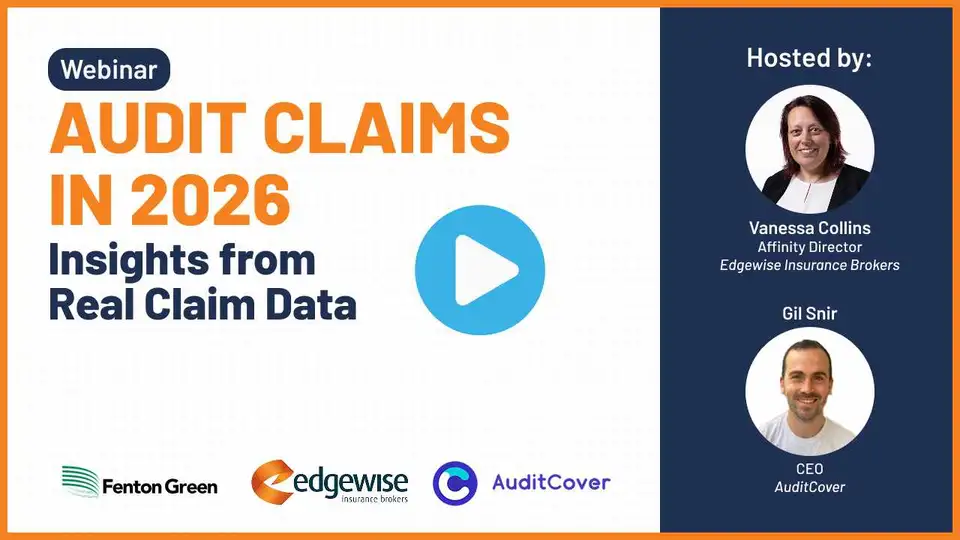
A recording of the full discussion is available here
The information on this page is intended for general educational purposes and necessarily simplifies some concepts for clarity. Insurance policies can differ widely between insurers, policy types, and jurisdictions. For guidance on your specific circumstances, you should review your policy documents carefully and consult a qualified insurance adviser, broker, or legal professional.